Groups
A group is a set of users within your organization — usually a team, such as Support or Sales. Groups are more than an organizational label; they are used throughout the product:
- Dashboards and QA statistics can be viewed per group, so a group typically maps to a team whose performance you want to track together.
- Supervisor access — roles with the Selected Groups access scope see only the users and conversations of the groups they manage (see Roles and permissions).
- Licensing — license usage can be tracked per group (see Subscriptions & Licensing).
To manage groups, go to Administration › User Management › Groups.
The group list
The list shows each group with its total number of users. From here you can Add Group, delete selected groups (Delete Group), or use the per-row Add User and Edit Group shortcuts.
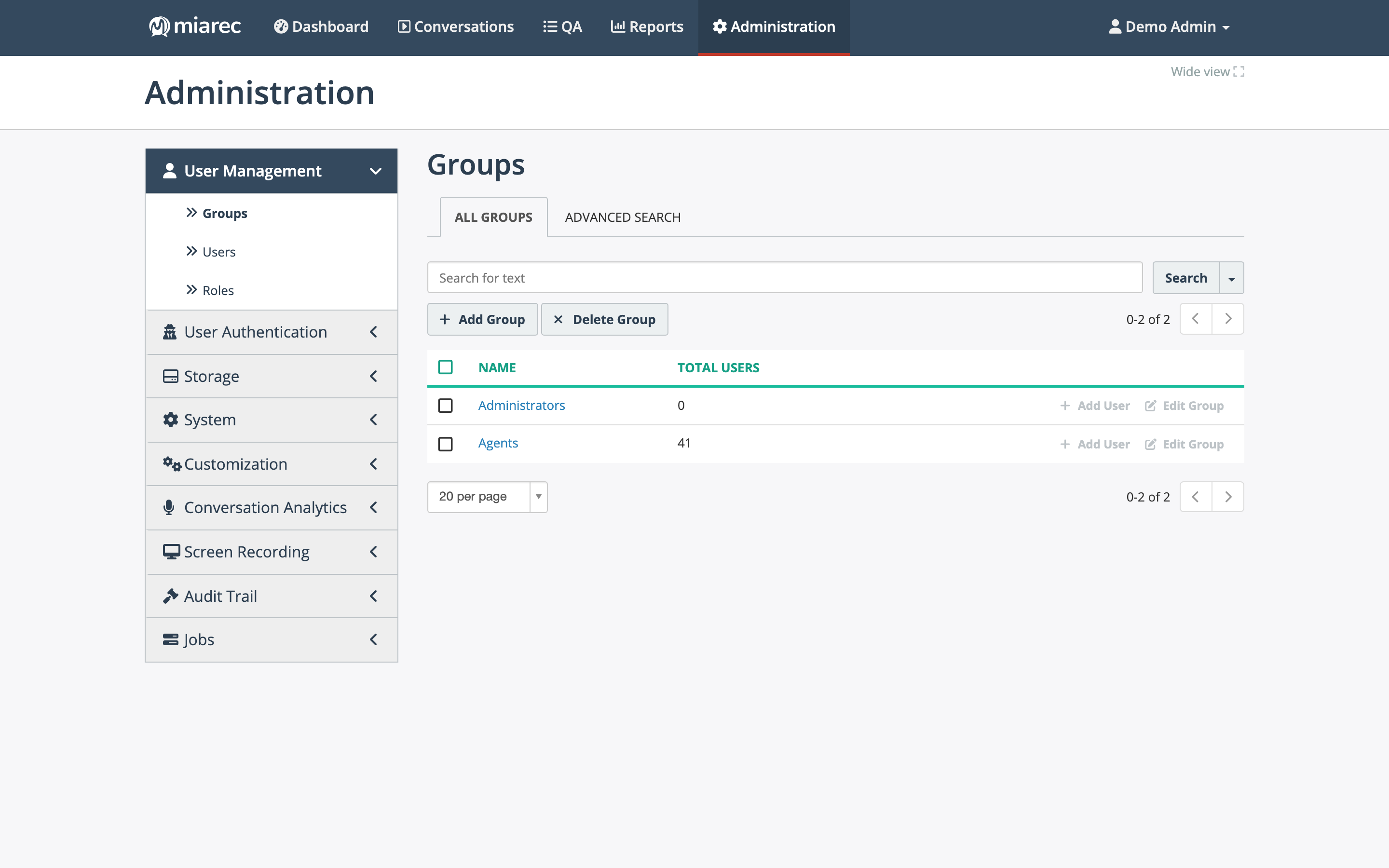
The Groups list. The Total Users column is a quick check that new users ended up in the right team.
Viewing a group
Click a group's name to open it. The group page shows the group's name and timezone, and the list of its members with the same search and toolbar actions as the main user list — Add User, Delete User, and Bulk Edit — scoped to this group.
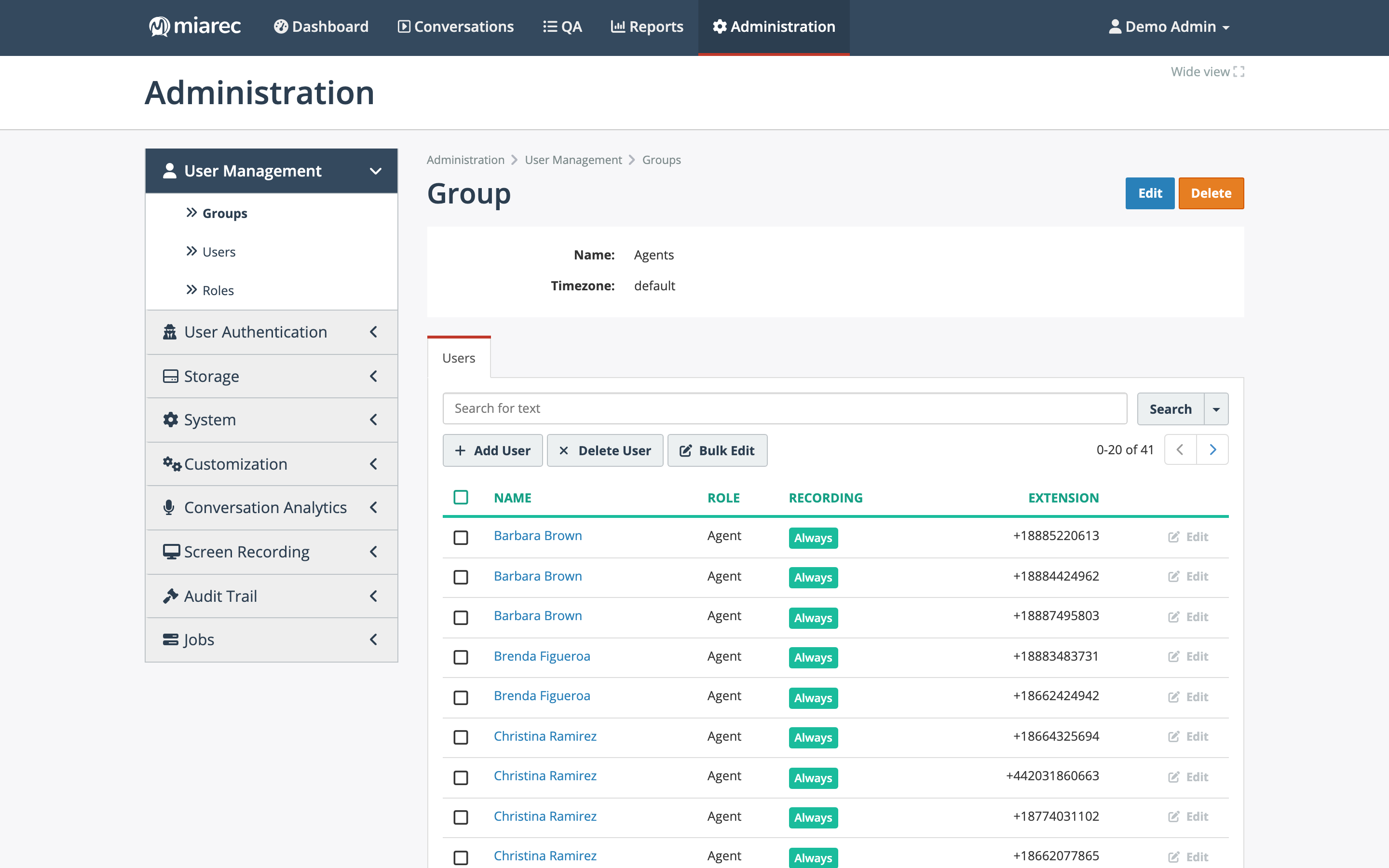
A group's page. The Users tab lists the members; Bulk Edit here changes settings for the whole team at once.
Adding or editing a group
A group has two settings:
- Name — the group's name.
- Timezone — the default timezone for the group's members. A user without their own timezone uses the group's; a timezone set on the user's profile overrides it.
Users are assigned to a group on their user profile (or via Add User on the group page) — see User accounts.
Related pages
- User accounts — create users and assign them to groups.
- Roles and permissions — grant supervisors access to selected groups.